When your thinking has structure, everything begins to settle.
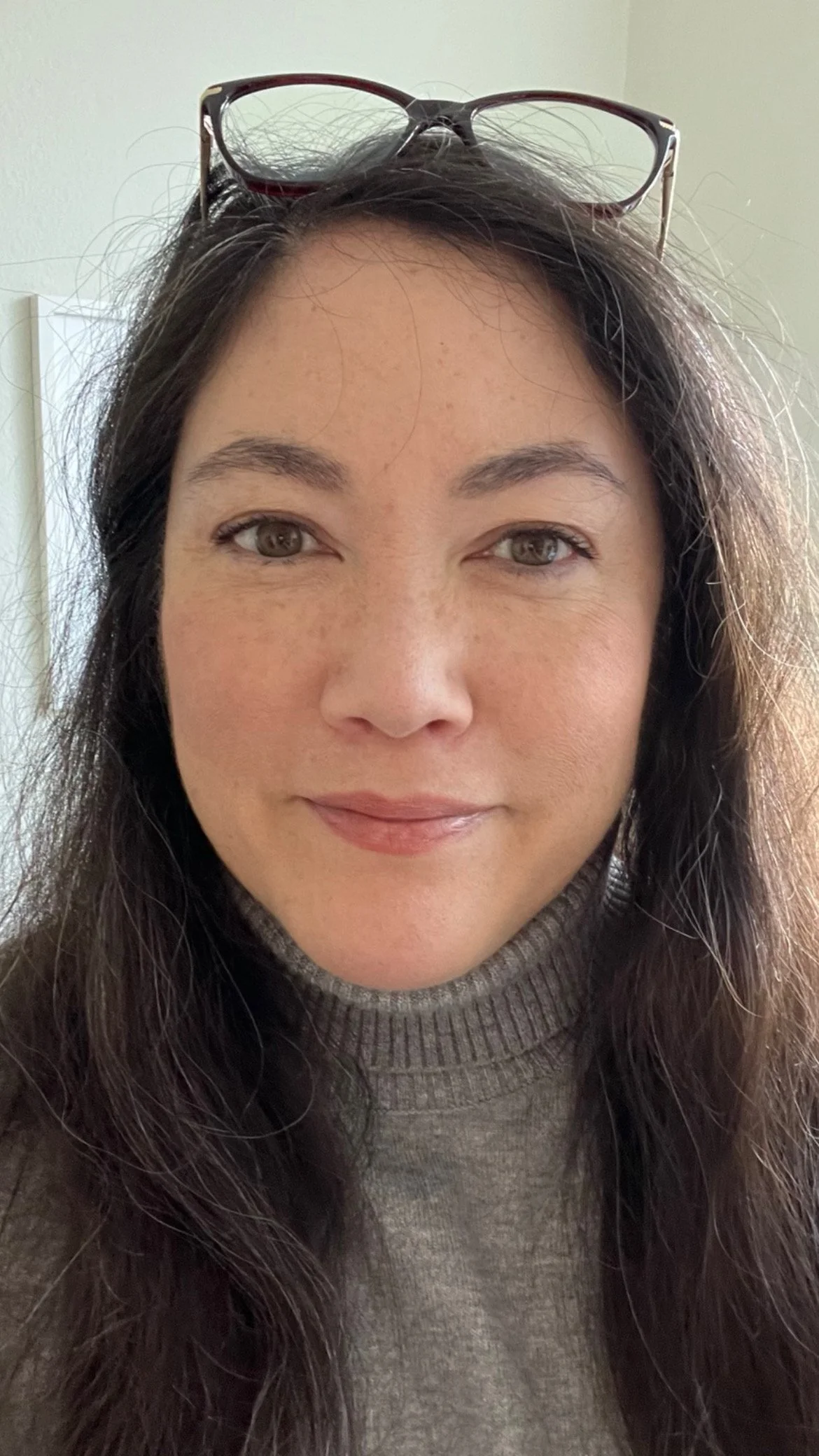
About Heather
I created Sacred Space London UK as a place for thoughtful conversation during times of change.
There are moments when something shifts.
The direction you have been following no longer fits.
My work is to provide a calm, structured environment where those moments can be given the attention they deserve.
My Background
I came to this work through my own experience of needing it.
In my twenties, after losing my job during a difficult period in the US, I made a deliberate decision to change direction. I trained in Massage Therapy and Neuromuscular Therapy.
It was also the first time I really began paying attention to my own body.
I became aware of how much I braced and held tension, and over time I began noticing similar patterns in the people I worked with. I had regular clients who seemed unable to fully relax, despite receiving the same care and techniques as others.
At first, I thought it was technique. Perhaps the method wasn't working.
But the longer I worked with people, the more curious I became about what else was happening.
What allowed one person to relax when another couldn't? What part did stress, emotion, thought and our own internal experience play?
Then life became very full. Career changes, marriage, raising a family, moves and eventually an international relocation. Those earlier questions moved quietly into the background.
Until I needed them again.
I reached a point where I was struggling in relationships across different areas of my life. Family, friendships, work. Eventually I had to ask myself a difficult question:
If this is happening in so many of my relationships, what is my part in it?
That question required something different from me.
I began looking more closely at my beliefs, my patterns, what I was responsible for and what I wasn't. I returned to the body. I studied Qigong. I began learning to relate differently to emotions I had previously experienced as overwhelming, not as something to judge or distance myself from, but as information worth listening to.
Over time, I realised that awareness alone wasn't enough.
I needed structure. Practices I could return to. A way of noticing what was happening, questioning the meaning I was giving it, deciding what mattered, and observing what changed when I responded differently.
Later, this exploration led me to further professional training in Clinical Hypnotherapy, alongside training in trauma-informed and nervous system-informed approaches. I applied what I was learning first to myself, then with classmates and volunteers, and eventually with clients.
The methods have evolved, but the question underneath them has remained remarkably consistent:
What remains steady when everything else is changing?
What I found wasn't a permanent state of calm or certainty.
It was a way of returning.
Much of what I understand about this work was learned through experience first, and understood more fully later. The framework can be described, but there are aspects of the work that are best understood by experiencing them: what you notice, what becomes possible when something shifts, and what changes when you begin responding differently.
How I Work
My approach is intentionally simple.
I do not offer quick answers.
The focus is on creating the conditions where you can think clearly, organise what you are holding, and arrive at decisions you can stand behind.
Our conversations are thoughtful and deliberate. We slow things down enough to notice what may otherwise be missed, make sense of what is happening, and identify what will help you move forward.
The work is collaborative. I bring structure, experience and careful attention to the process. You bring your experience, your questions and a willingness to engage honestly with what is there.
Why Small Groups
There is an additional dimension to this work when it happens alongside others.
Hearing someone articulate something you recognise in yourself can bring a perspective that is difficult to reach alone. Not through comparison, but through recognition.
For this reason, my cohorts are deliberately small. This allows conversations to remain focused, considered and personally relevant while leaving room for the shared experience of the group.
Professional Background
My work draws on more than two decades of experience and study across the body, mind and nervous system, including Massage Therapy, Neuromuscular Therapy, Clinical Hypnotherapy, Qigong, and further training in trauma-informed and nervous system-informed approaches.
I continue to study human behaviour and the relationship between our internal experience, the choices we make and how we move through change.
Closing
If you are navigating a period of change and want to approach it with care and attention, you can apply to join the current cohort or enquire about working one to one.